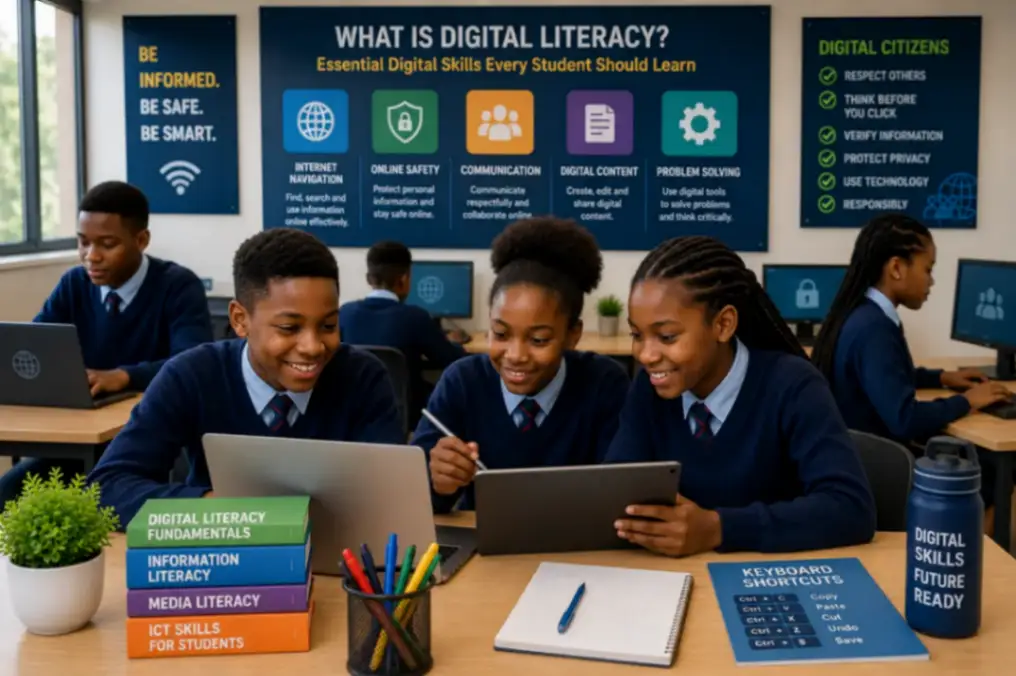
What Is Digital Literacy? Essential Digital Skills Every Student Should Learn
- Barvic Digital Skills Hub
- 03/09/2025
Introduction
Technology has become part of almost every aspect of modern life. Students use computers, smartphones, tablets, and the internet to learn, communicate, research, collaborate, and create. As technology continues to shape education and the workplace, digital literacy has become one of the most important skills every learner should develop.
However, simply knowing how to use a computer or smartphone does not make someone digitally literate.
Digital literacy is the ability to use digital technologies confidently, safely, responsibly, and effectively to access information, solve problems, communicate, collaborate, and create digital content.
In Kenya, where Competency-Based Education (CBE) emphasizes practical learning and lifelong competencies, digital literacy equips learners with the knowledge and confidence they need to succeed both in school and beyond.
Whether a learner dreams of becoming a doctor, engineer, entrepreneur, teacher, artist, or software developer, digital literacy provides the foundation for lifelong learning and future success.
What Is Digital Literacy?
Digital literacy is the ability to use computers, digital devices, software, and the internet effectively, responsibly, and safely.
It goes beyond knowing how to operate a computer.
A digitally literate learner can:
- Find reliable information online
- Evaluate digital content critically
- Communicate using digital tools
- Create presentations and digital documents
- Collaborate online
- Protect personal information
- Solve problems using technology
- Adapt to new digital tools
- Understand emerging technologies such as Artificial Intelligence (AI)
Digital literacy helps learners become confident users and creators of technology rather than simply consumers.
Why Is Digital Literacy Important for Students?
Technology continues to transform how we learn, work, and communicate.
Students who develop strong digital literacy skills are better prepared to:
- Complete school assignments efficiently
- Conduct online research responsibly
- Collaborate with classmates
- Create digital projects
- Adapt to new technologies
- Prepare for higher education
- Build successful careers
Digital literacy also supports independent learning by giving students the confidence to explore, learn, and solve problems using technology.
10 Essential Digital Literacy Skills Every Student Should Learn
1. Computer Fundamentals
Every learner should understand the basic components of a computer, including hardware, software, operating systems, file management, and common applications.
These foundational skills make it easier to learn more advanced digital technologies.
2. Internet and Online Research
The internet provides access to an enormous amount of information.
Students should learn how to:
- Search effectively
- Identify reliable sources
- Verify information
- Avoid misinformation
- Reference digital sources appropriately
These research skills support academic success across all subjects.
3. Digital Communication
Modern communication increasingly happens online.
Students should understand how to communicate professionally using:
- Video conferencing
- Online collaboration platforms
- Digital messaging tools
They should also learn digital etiquette and respectful online communication.
4. Productivity Tools
Every learner should know how to use productivity applications such as:
- Microsoft Word
- Microsoft Excel
- Microsoft PowerPoint
- Google Docs
- Google Sheets
- Google Slides
These tools help students complete assignments, organise information, analyse data, and present ideas effectively.
5. Online Safety and Digital Citizenship
Digital literacy includes understanding how to stay safe online.
Students should learn:
- Password security
- Privacy protection
- Responsible social media use
- Cyberbullying awareness
- Safe internet browsing
- Ethical use of technology
Responsible digital citizenship helps learners become respectful and informed members of the online community.
6. Coding and Computational Thinking
Learning coding develops logical thinking, creativity, and structured problem-solving.
Students may begin with beginner-friendly platforms before progressing to programming languages such as:
- HTML
- CSS
- JavaScript
- Python
Coding helps learners understand how technology works while encouraging innovation.
7. Artificial Intelligence (AI) Awareness
Artificial Intelligence is becoming part of everyday life.
Students should understand:
- What AI is
- How AI works
- Responsible use of AI
- AI-powered learning tools
- Ethical considerations surrounding AI
Early exposure prepares learners for future opportunities while encouraging responsible technology use.
8. Digital Creativity
Technology enables learners to express their creativity in new ways.
Students can learn to create:
- Graphics
- Videos
- Presentations
- Websites
- Digital artwork
- Interactive projects
Creative digital skills encourage innovation and confidence.
9. Collaboration and Teamwork
Many learning and workplace environments require collaboration using digital tools.
Students should become comfortable working together through shared documents, online discussions, virtual meetings, and collaborative projects.
These experiences prepare learners for modern workplaces.
10. Lifelong Learning
Technology evolves continuously.
Digital literacy teaches learners how to adapt, explore new technologies, and continue learning throughout their lives.
This mindset is one of the most valuable skills learners can develop.
How Digital Literacy Supports Competency-Based Education (CBE)
Competency-Based Education focuses on helping learners apply knowledge in practical situations.
Digital literacy naturally supports several CBE competencies, including:
- Communication
- Collaboration
- Critical thinking
- Creativity
- Learning to learn
- Digital literacy
- Self-efficacy
- Citizenship
By using technology to solve problems, complete projects, and collaborate with others, learners gain practical experience that extends beyond traditional classroom learning.
Benefits of Digital Literacy for Students
Students who develop digital literacy enjoy numerous academic and personal benefits.
Improved Academic Performance
Digital tools enable learners to research efficiently, prepare assignments, organise information, and create engaging presentations.
Greater Confidence
Understanding technology reduces fear and encourages learners to explore new ideas independently.
Better Problem-Solving Skills
Technology challenges learners to think critically and develop logical solutions to everyday problems.
Enhanced Creativity
Students use digital tools to design graphics, build websites, produce videos, and create innovative projects.
Future Career Readiness
Digital literacy prepares learners for careers across many industries, including technology, healthcare, engineering, finance, education, agriculture, media, and entrepreneurship.
How Parents Can Support Digital Literacy at Home
Parents play an important role in developing digital literacy.
They can:
- Encourage responsible technology use
- Create opportunities for educational screen time
- Explore digital learning platforms together
- Support online research for school projects
- Discuss internet safety regularly
- Encourage creativity using digital tools
Learning continues beyond the classroom.
How Schools Can Strengthen Digital Literacy
Schools can improve digital literacy by:
- Integrating technology into everyday learning
- Establishing coding clubs
- Providing access to digital learning resources
- Encouraging project-based learning
- Training teachers in digital tools
- Introducing coding and Artificial Intelligence
- Promoting responsible digital citizenship
These initiatives prepare learners for an increasingly digital future.
How Barvic Digital Skills Hub Supports Learners
Barvic Digital Skills Hub provides a structured digital learning ecosystem that guides learners from foundational digital literacy to advanced technology skills.
Our programmes include:
- Computer fundamentals
- Productivity tools
- Internet safety
- Coding and programming
- Artificial Intelligence
- Graphic design
- Digital marketing
- Robotics
- Project-based learning
- Progress tracking through the Barvic Learning Management System (LMS)
Learners receive practical experience, mentorship, and structured guidance that complements Competency-Based Education (CBE) while preparing them for higher education, future careers, and lifelong success.
Frequently Asked Questions
What is digital literacy?
Digital literacy is the ability to use digital technologies confidently, safely, responsibly, and effectively for learning, communication, problem-solving, and creating digital content.
Why is digital literacy important for students?
Digital literacy helps students succeed academically, communicate effectively, solve problems, stay safe online, and prepare for future careers.
What is the difference between computer literacy and digital literacy?
Computer literacy focuses on using computers and software, while digital literacy includes online research, communication, digital safety, critical thinking, collaboration, and responsible technology use.
Does digital literacy support Competency-Based Education?
Yes. Digital literacy strengthens many competencies promoted under CBE, including communication, creativity, collaboration, critical thinking, and self-directed learning.
At what age should children begin learning digital skills?
Children can begin developing age-appropriate digital literacy skills in primary school and gradually progress to coding, Artificial Intelligence, robotics, and advanced digital technologies.
Is coding part of digital literacy?
Yes. Coding is an important component of digital literacy because it helps learners understand how technology works while developing logical thinking and problem-solving skills.
Prepare Learners for a Digital Future
Digital literacy is no longer an optional skill. It is a foundation for academic success, lifelong learning, responsible technology use, and future career opportunities.
By investing in digital literacy today, schools and parents equip learners with the confidence, creativity, and practical skills needed to thrive in an increasingly digital world.
Barvic Digital Skills Hub is committed to helping learners build these essential competencies through structured, practical, and engaging digital learning programmes.
Ready to Help Your Learners Build Future-Ready Digital Skills?
Contact Barvic Digital Skills Hub today and discover how we can support your school's digital learning journey.
Explore Programme Details