Structured Learning in Digital Skills Training and Tech Mentorship: How Barvic LMS Makes It Work
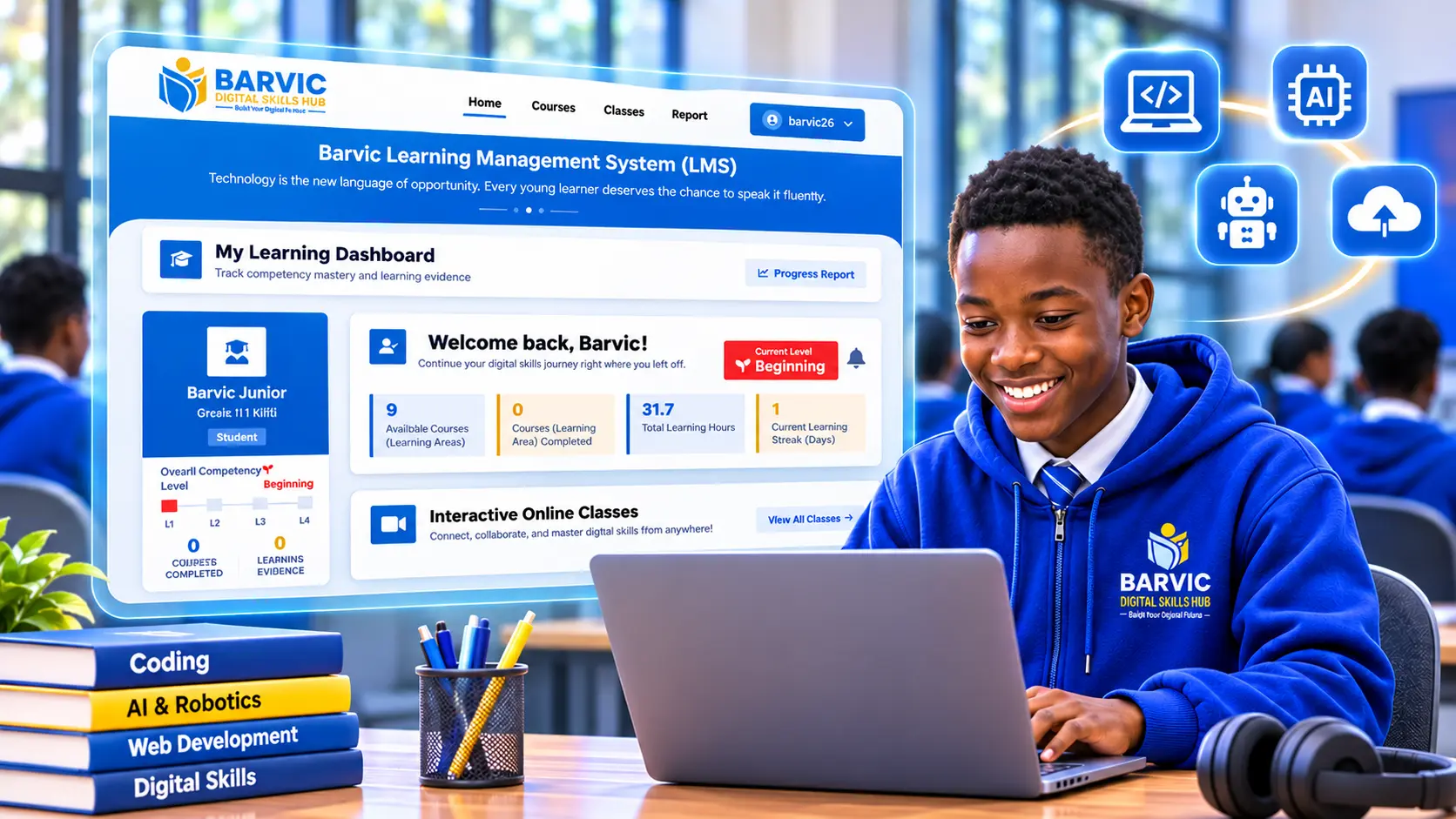
Most people who try to learn coding or other digital skills start with enthusiasm and a browser full of free tutorials. A few weeks later, many have stopped. The problem is rarely talent or motivation. It is the lack of structure: no clear starting point, no sequence, no way to measure progress and no one to ask when they get stuck.
The stakes are rising. A World Bank study projected that 50 to 55 percent of jobs in Kenya will require digital skills by 2030, and Kenya's Communications Authority is now training 120,000 people across 19 counties. Access to training is growing fast. What decides whether that training turns into real ability is how the learning is organised.
This article explains what structured learning means in digital skills training, why tech mentorship works best inside a structure, and how Barvic LMS brings both together on one platform.
What Is Structured Learning in Digital Skills Training?
Structured learning is a planned path from beginner to competent, where every lesson builds on the one before it and every step has a clear goal. Instead of jumping between random videos, the learner follows a sequence designed by educators.
A structured digital skills programme usually has five parts:
- 1 A defined starting point. Foundational courses that assume no prior knowledge.
- 2 A logical sequence. Concepts introduced in the order learners need them, from simple to complex.
- 3 Clear learning outcomes. Each lesson states what the learner will be able to do by the end.
- 4 Practice and assessment. Hands-on activities and questions that check understanding before moving on.
- 5 Visible progress. Reports, badges and certificates that show how far the learner has come.
Structured Learning vs. Self-Directed Tutorials
| Random online tutorials | Structured learning | |
|---|---|---|
| Starting point | Learner guesses | Set by the curriculum |
| Order of topics | Unplanned, often with gaps | Sequenced and cumulative |
| Practice | Optional | Built into every lesson |
| Progress tracking | None | Reports, badges, certificates |
| Support | Comment sections and forums | Teachers and mentors |
| Outcome | Scattered knowledge | Demonstrated competence |
The result is less time wasted, fewer knowledge gaps and learners who can actually apply what they have learned.
Why Tech Mentorship Works Best Inside a Structure
Tech mentorship gives learners something no video can: a person who explains, encourages and corrects in real time. But mentorship without structure often becomes a series of disconnected chats. Mentor and learner spend sessions working out what to cover instead of covering it.
When mentorship sits on top of a structured curriculum, every session has a purpose:
- Shared roadmap. Mentor and learner both know which course, topic and learning outcome comes next.
- Data-driven guidance. Progress reports show exactly where a learner is struggling, so mentors focus on the real gaps.
- Live interaction. Online classes let mentors demonstrate, answer questions and review code as it is written.
- Accountability. Badges, certificates and assessments give learners milestones to work towards between sessions.
- Real practice. A coding environment lets mentors set exercises and review saved work.
Structure gives mentorship direction. Mentorship gives structure a human face. Learners need both.
Competency-Based Education: The Backbone of Structured Learning
Competency-Based Education (CBE) measures learning by what a learner can do, not by how many hours they sat in class. Kenya's education reforms have put CBE at the centre of how schools and TVET institutions teach, and digital skills are a natural fit: you either can build the web page or you cannot.
CBE content is organised in layers, each one more specific than the last:
- 1 Strand: a broad area of study, such as Programming Fundamentals.
- 2 Sub-strand: a focused topic within the strand, such as Variables and Data Types.
- 3 Learning outcome: a specific, measurable skill, such as "declare and use variables to store different types of data."
- 4 Outcome content: summary notes that explain the concept, learning activities where the learner applies it, and assessment questions that confirm the outcome has been achieved.
This breakdown means learners always know what they are working towards, teachers and mentors can pinpoint exactly which outcome a learner has not yet mastered, and parents and schools can see real evidence of competence.
Barvic LMS: Structured Learning and Tech Mentorship in One Platform
Barvic LMS is a learning management system built for digital skills training and tech mentorship. It turns the principles above into a clear, guided experience, from a learner's first login to their first certificate.
1. Personal Dashboard
Learners see their courses, upcoming classes, achievements and progress at a glance, so they always know what comes next.
2. My Courses: 8 Introductory Fundamental Courses
8 introductory, fundamental courses give every beginner a solid foundation before moving to advanced topics.
3. Interactive Online Classes
Live classes connect learners with instructors and mentors for real-time questions, demonstrations and feedback.
4. Bookmarks
Learners save lessons and activities to revisit later, making revision quick and easy.
5. Student Progress Reports
Reports show performance across courses and learning outcomes, so teachers, mentors and parents know where to help.
6. Achievements: Badges and Certificates
Badges mark milestones and certificates confirm completed courses, keeping learners motivated and giving them proof of their skills.
7. Inbuilt Coding Editor
Learners write, run and save code in the browser with nothing to install, and mentors can review their saved work.
8. Content Aligned with Competency-Based Education
All content follows the CBE structure of strands, sub-strands and learning outcomes, with each outcome broken into three parts:
| Component | What it does for the learner |
|---|---|
| Summary notes | Explain the concept clearly and concisely |
| Learning activities | Let the learner practise and apply the skill |
| Assessment questions | Confirm the learning outcome has been achieved |
Frequently Asked Questions
What is structured learning in digital skills training?
It is a planned learning path where lessons follow a logical sequence, each with clear outcomes, practice activities and assessments, so learners build skills step by step instead of jumping between random tutorials.
Do I need to install software to code on Barvic?
No. Barvic LMS has an inbuilt coding editor where learners write, practise and save code directly on the platform.
Is Barvic suitable for complete beginners?
Yes. Barvic offers 8 introductory fundamental courses designed for learners with no prior experience.
Start Learning the Structured Way
Digital skills open doors, but only when learning is organised well enough to stick. Structured, competency-based content gives learners a clear path. Tech mentorship gives them the support to keep moving along it.
Barvic LMS combines both, with a personal dashboard, 8 foundational courses, live online classes, progress reports, badges and certificates, and an inbuilt coding editor.
Ready to Start Learning the Structured Way?
Create your Barvic account today, or contact us to bring Barvic LMS to your school or training centre.
Get Started with Barvic LMS